
ShareBear
PREPPING

When I hear the words "72 hour Kits" I cringe and my mind immediately goes to those oversized first aid kits. Would you be able to live with just the items from inside one of those? Maybe...Technically, you can survive three weeks without food and three days (72 hours) without water... but would you REALLY want to? Yikes!
In the 72 Hour Kits that we will be talking about, you may find a bit more than bandaids... but they will make an Emergency situation much easier to get through.
THE PLAN
YOU SHOULD ALWAYS KEEP A COPY OF YOUR FAMILY'S EMERGENCY PLAN AS WELL AS YOUR CHILD'S ID KIT IN YOUR VEHICLE FOR EMERGENCIES!


DON'T FORGET ME!
Also, when beginning your planning, don't forget to include ALL members of your family including PETS and disabled/elderly relatives nearby that would rely on you in a crisis.


For ideas of what to pack in your Pet's 72 Hour Kit,
click on the animal picture above.
LOCATION LOCATION LOCATION
Where are you going to keep your 72 Hour kit? The location of where you want to keep it will determine what type of container you should put your 72 hour items in.
For example, If you are keeping your 72 Hour kits next to your car in the garage:
Do not put your Food items in a cloth container such as a backpack because rodents will be drawn to it. It is a good practice to put traps down in your garage to catch rodents from destroying and chewing on everything in your garage, however, unless your checking on your traps and your 72 hour kits everyday, it's easiest to choose the right container for the right location.

Mice and other rodents NEED to chew. Their teeth are constantly growing. Mice CAN and DO chew through: Drywall, plastic containers, steel wool, concrete, wood, expanding foam, fiber glass, aluminum, and more! To learn more about what these little guys are capable of, click on the mouse above.

CONTAINERS
If you don't have any problem with rodents, cats, dogs, or other pets that would chew into your storage containers in your house, than you should be able to store your 72 Hour kits practically anywhere inside your home. You can use plastic totes, suitcases, old backpacks, grocery bags, etc anything is fine.

If you want to make it easy on yourself, you can pack EVERYTHING into a CAR Carrier. (Once you've filled the Carrier with your 72 Hour Emergency Supplies, you may not be able to lift that kind of weight onto the top of your car.)


To strap these carriers onto your car, you will need more than just the side rails on your car, you will need something called CROSS RAILS to keep the carriers from sliding off of your car. Since everyone has a different car, I will not be providing links for your car's make/model. You will have to research that information on your own, but they will look like the picture below. (With 80MPH winds against an abrupt surface on your car, your car will need more than side rails.)
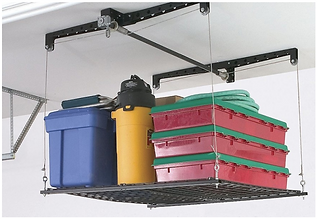
***In an emergency you might be home alone with your children, you'd need to lift all that by yourself, or frantically empty it all, strap down the carrier, and try to refill it while your kids are running around panicking. I'd recommend that if you want to purchase a Car Carrier container to store your items, that you invest in an Adjustable Hanging Shelf/Rack. Everyone's garage heights are different, everyone's car heights are different so I wouldn't get a stationary of fixed shelf. You'd want one that you can lower to the height of your car and simply slide the carrier onto your car in times of an emergency.

NOW
LET'S GET PACKING!!!
PILLS


I feel like the Most Important thing to pack first is 3-4 days worth of medications and everyday pills for the entire family.
In an emergency, during the first few hours, you may be able to still find a little food and a little water. BUT more than anything else, in an emergency, you will not only NEED to be functional, but you'll need to be able to perform beyond what you usually do!
If your children, pets, or loved ones need daily medication, you need to pack that FIRST.
Pill cases are relatively cheep. You can simply REUSE old pill containers or find some new ones online. These pill cases have a LOT of storage and should be adequate storage for your whole family for 72 hours.

HYGIENE ITEMS
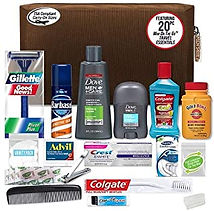
Hygiene items such as shower wipes, feminine hygiene items, and diaper bags items (creams, powder, wipes, diapers, extra clothes, baby thermometer, infant tylenol, baby formula) will be your best friend in an emergency. During ANY emergency, Fire, Earthquake, or Flood. You and your loved ones are VERY likely to get dirty...and if there are no showers for three days you're going to get pretty stinky too. Military personnel have used large shower wipes for over a decade to keep clean in dirty situations and they work great! Be sure to pack enough hygiene items that your family might need for three days.


Soap, loofa, toothbrush, toothpaste, deoderant, Q-tips, combs, razors, feminine hygiene, and toilet paper are all items that are used daily and come in small travel sizes to take up minimal space. I love these unscented shower wipes to get yourself back to feeling refreshed even when there is no water for a shower. Because they are non-scented, they are not sticky or have any weird smell to them.


I am also really liking the idea of these diaper bags for small babies (with built in changers and PHONE chargers!) In emergencies with young children, you could pull this out and lay beside it, using it as a makeshift bed. Babies will sleep for a few hours at a time in their carseats... but I'm sure after awhile of not being able to move around and being stuck in that position, I'd be crying too. :)
Through experience I have found it wise to keep items from these first two sections in my car anyway. There's always a bathroom emergency, someone forgot to take their pills, or some other crazy curve ball life throws at me, it's best to have these items within arms reach.
WATER

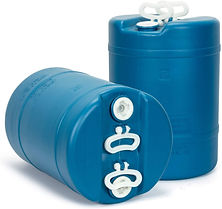
Other than pills to keep you alive and functional, I believe that Water is the most important things you can plan for in an emergency. The MINIMUM recommended amount of water you should store is 1 Gallon per person per day. So a family of 5 would need a MINIMUM of 15 Gallons of water to get them through a 72 Hour emergency. Sounds like a lot? Trust me, it goes FAST!
After an emergency you may have to clean up throw up, blood, bathroom accidents, sanitize, wash hands, cook meals, wash dishes, etc. If your water isn't on after a disaster, the water you have reserved will go very quickly.
There is a difference between preparing EXTRA food & water storage and having a 72 Hour Kit. Everything in your 72 Hour kit should be PORTABLE. If you cannot lift it, than you probably shouldn't consider it as part of your 72 Hour Emergency kit unless you are physically unable to leave your house anyway.
15 Gallons

3.5 Gallons

6 Gallons

2 Gallons

5 Gallons

Water Treatment
Water weighs 8 pounds per gallon. So, that 15 gallons that we talked about earlier, for that family of 5 would weigh 120 lbs! If you cannot lift a large 120 lbs container, for your family, into your car during an emergency... than this is NOT an ideal storage container for you. Smaller containers may take up more room and take longer to load in an emergency BUT, you have to keep things practical! There is also the possibility that you or your spouse may become injured during the emergency, and may not be able to lift as much as you'd like to.
Also, by separating your water storage into several smaller containers you run less of a risk that ALL your water could become contaminated or go bad over time. There is also the risk that your containers could fall over, spill, or break open during an emergency. But you run less of a risk if you don't "put all your eggs into one basket." (Or put all your water into one container.)
Water should be stored in sterilized, approved (non-leaching) containers that can block out light and UV rays that cause the water to go bad. All stored water should also be treated with water treatment before storage. (Click on the above image for a link to water treatment.) By Treating your water, it can stay clear and taste fresh- tasting for decades!
WATER FILTERS
Are water filters and purification necessary?
The human body can survive 3 days without water before your organs will start to shut down. If you have to leave your home and only have the food, water, and essentials that you have packed. Wouldn't you want a backup plan? Especially if that back up plan costs less than $100 and could save your life?
There is also the potential that something could happen to your STORED water supply that you had planned to use for an emergency, or it gets used up before more water is available to everyone, wouldn't you want a safe way to replenish your water? Of course you would.

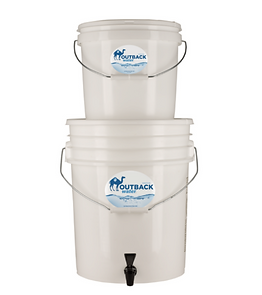

Small hand pump with a powerful filter. Convenient for 1-2 people. It can filter up to 200 Gallons.
These Filter buckets are light weight and you are able to store other 72 hour items in them when not in use. They can easily be made for around $40. (See our section on water filters).
This camping drip filter can filter requires no pumping and can filter 2 liters per minute and over 390 gallons.
WATER PURIFICATION
It is important to remember that water filtration only focuses on removing impurities such as sand and living organisms. ... The impurities focused on in water purification are those that relate to the overall safety of the water such as biological contaminants, viruses, chemicals and other unseen materials.


FOOD & SNACKS
The most important thing to remember when packing food for your family is to only pack foods that you have tried and would normally eat. When tensions are high and children are rattled and scared, the last thing you want to do is to have more complications with them refusing or unable to eat what you have packed. You're going to be stressed, your family is going to be stressed, it's much easier (and in fact comforting to your family) to eat something they are familiar with.
I like to store the food for my 72 Hour Kit in a cooler in my car. It has everything separated by Days & Meals. So all I have to do is pull out the Large Gallon Size ziplock bags for each person.
BREAKFAST IDEAS
Below is a list of ideas, may of which can be purchased from your local dollar store.


LUNCH IDEAS
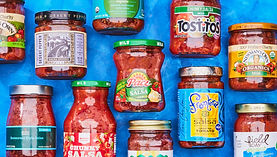


DINNER IDEAS


OTHER MEAL IDEAS
Why in the world would I include things that need boiling water or a microwave?
During an emergency I would LOVE to provide at least one warm meal a day for my family.
It's amazing the comfort it brings to the whole body and soul.
So, how am I going to do that?


+
In the event of an emergency IF I am still able to still use my car...
MOST cars have a 12V Cigarette lighter/Port.
Some of the newer cars also include an outlet.
Keep in mind that you only need one of these options. All of them will be able to boil water.

+
Submersible Heaters


Car Outlet AC Converters


12V Car Kitchen Items


Get the heck out of dodge, and then fill & plug in this slow cooker as you drive to new lodging for a quick meal idea.
=
ENDLESS POSSIBILITIES - For On The Go
Don't have the money for these extra gadgets? Don't worry.
By using your own pots and pans, and following proper campfire techniques, you can cook for your entire family.

Check out our page on Fire Starters

Learn how to START and KEEP a campfire going safely
CASH

How are you going to pay high prices for emergency gas, groceries, or camping fees if the power is out? It is ALWAYS recommended to have extra cash stored away in your 72 hour kit for emergencies. How much money is of a large debate. It IS however, recommended that you save the small bills. 20's, 10's, 5's and 1's. In an emergency, it could be very difficult to try and find someone to break anything over a $20 bill.
INDIVIDUAL WARMTH
Packing away old/extra coats, jackets, or blankets are a good/ thrifty way to keep warm in an emergency. However, they WILL take up a lot of room in your 72Hour kits. Here are some other thermal options available to you that also pack nicely.
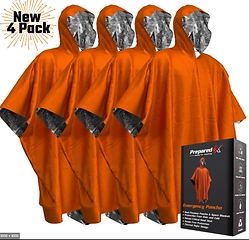


These ponchos double as a thermal blanket, come in a 4 pack, AND can be turned inside out to reflect light to gain the attention of rescuers.
These Thermal Mylar blankets are inexpensive, light weight, reflect heat back to you, and easy to pack.
This down blanket is windproof and has snaps on it that allow it to stay securely around you as you walk or work.
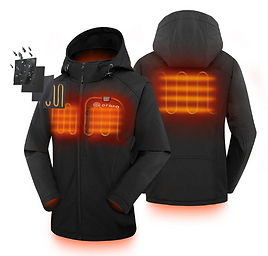


You CAN also use your CAR'S heater in an emergency... BUT in an Emergency Situation, the gasoline prices will sky rocket and the gas at your local stations will be scarce. You will probably ONLY want to rely on your car for travel and essentials such as charging your phone and emergency notification through radio stations at that point.
EMERGENCY FIRST-AID KITS
We are all in this life together, and like it or not, when push comes to shove you've got to decide what kind of person you are going to be. We are all going to die eventually, but how will you LIVE? Give Aid to not only your family in times of emergency, but to others in need as well. Here are a few different options for an EMERGENCY First Aid Kits, as well as a list for people who would rather pack their own. Customize as needed for your own family or individual situation.

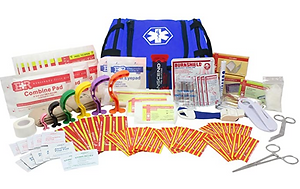

Do you have medical training? Maybe THIS is more of your style:

Build your own First Aid Kit - Here's a list to get you started.
(lClick on the link below)

EMERGENCY CAR KIT
There should already be an Emergency Car Kit in your car. Don't pack it with your 72 hour kit, you'd want this one within arm's reach as well. You should have a spare tire, a jack, a tire iron that works for that vehicle, jumper cables, a flashlight, a multipurpose tool (leatherman), thick gloves, a rain poncho, a seatbelt cutter/window breaker tool. For a full list, see the link below.


CLOTHING
You don't need to pack too many clothes for your kids. The clothes that they are wearing should get them through the first 24 hours. But if they need to switch into new clothes, this list should get them through the next 48 hours.
Be sure that if you or your child goes up or down in sizes, to update the clothes you packed for them. (I like reusing my children's old backpacks for their clothing. In an emergency if I have to run them to a restroom to change their clothes, I know that all I have to do is grab their old backpack and be on my way. Plus it's easy for them to carry as well! I also ALWAYS include (3) gallon size ziplock bags in each backpack for each potential change of dirty clothes for that child. That way the kids can put them back into their bag without soiling their clean ones.

72 HOUR CLOTHING PACKING LIST: (Per Person)
1 Pair of Pants
1 Pair of Shorts
2 Pairs of Socks
2 Pair of Underwear
1 Long Sleeve Shirt
1 Short Sleeve Shirt
1 Light Jacket
1 Hat
1 Pair of Sunglasses
(Optional for Church Going Girls: 1 Small Sundress w/ leggings
(Optional for Church Going Boys: 1 Thin Dress Pants, Shirt, and Tie)
(Optional: Last Year's Swimsuit - If it still fits)
(Don't worry about packing shoes - Use whatever they are wearing - Everyone will understand)
*Why did I put a swimsuit?! If you are able to find a place outside of your home to bathe yourself or your children, it might not be a private place and my even be outdoors. Let's not make things awkward for them and instead be something fun. PLUS if you end up staying at a hotel or nice camping site, a lot of them have pools. And whats better to lighten the mood than splashing in some water?
SHELTER

Hurricane / Flood

Fire

Tornado

Earthquake
In the event of an emergency, where are you going to go? If there is a flood and your stuck at home, you may have to stay there until help comes to your aid. Or if a Tornado, Earthquake, or fire force you to flee, It might be possible for you and your loved ones to stay in your Car, Camper, or Tent. For more information about what to do before, during, and after these specific disasters, click on the images above.
MORTGAGE

If you have a Home Insurance Policy (a lot of mortgage companies sometimes make you purchase this upon the closing of your house. (Contact your mortgage company to see if YOUR HOME is covered under a LOSS OF USE - HOME INSURANCE POLICY.) This allows you to be able to stay at a hotel, campsite, or other temporary residences and be compensated for the cost.
RENTING
RENTING? Don't have an insurance policy or extra cash? Don't worry, we got you covered. Click the link below to find local American Red Cross locations in your area.
(Some of the shelters shown on the map may be operated by partner agencies and are not Red Cross shelters.)


OTHER OPTIONS
Hotels fill up fast during an emergency. Other temporary options for shelter can be as easy as an online search! Amazing websites such as VRBO or AIRBNB can quickly help you find adequate lodging within your price range and away from danger. You may even be able to message the owner of the home directly to negotiate a lower price in times of emergency.


CAMPING
Camping is an affordable way to you family to find lodging in times of emergency. Some campsites have restrooms, showers, utility hookups for motor homes, and sometimes they even have a playground or swimming pool.
*** I DO NOT RECOMMEND CAMPING IN UNKNOWN / UNMARKED CAMPING SPOTS WHERE YOU DON'T HAVE TO CHECK-IN TO.***
WHEN ANY EMERGENCY HAPPENS IT IS UNWISE TO SEPARATE YOURSELF FROM OTHERS WHO COULD BE OF HELP OR WARN YOU OF ANY DANGERS KNOWN IN YOUR AREA. IF YOU CAMP AT A REMOTE AREA DURING AN EMERGENCY, THERE MAY ME LITTLE TO NO CELL PHONE SIGNAL, POWER, OR UTILITIES. ALSO, THERE WILL BE NO ONE TO NOTIFY YOU OF OTHER INFORMATION ABOUT YOUR LOVED ONES, UPDATES, OR PREDATORS OR UNSAFE AREAS.


TENTS
If you are planning on purchasing a tent for your Emergency Supplies, I would recommend that you purchase a 4 Season / All Weather type of tent that is able to withstand all types of weather and temperatures. In an emergency where you have to leave you home, you'd want to provide adequate protection against the elements. Here's a few examples of some majorly different all weather tents. When considering a new tent, make sure you have enough room for all of your family, pets, and elderly/disabled family that you would bring. But don't get too carried away, you also don't want too much room. An 8 person tent will be drafty and wouldn't keep 2 people as warm as a smaller tent would.

2 Person Tent


3 Person Tent
Family Size
CAMPERS / MOTOR HOMES
Can't pay top dollar for NEW but looking for USED options for a Motor Home or Emergency Vehicle? These websites usually have some pretty good deals.


